Relationships are not self-perpetuating. They need care. How to provide that care is the challenge. Personally, as with anything, I believe that being pro-active is always a better position to be in than having to be reactive. When you are pro-active, you are able to be emotionally stable, think clearly, and plan accordingly.
Being proactive in the context of a relationship means identifying areas that could potentially lead to disagreement or conflict and, once identified, mutually and creatively agree upon solutions that would be implemented if and when those misalignments appear — and before they rise to the level of conflict.
Having practiced Family law and mediated family issues for over two decades, I came to see patterns in relationships. Patterns stemming from different points of view about things that matter which inevitably surface in long-term relationships, with or without children.
When I saw the high frequency with which these unresolved misalignments arose and where neglect or denial of them led, I realized there was a way to pre-determine when and how misalignments between spouses or partners would arise and to what degree those misalignments would likely manifest. Once identified, mediation could then provide the way in which two people could be proactive and negotiate, in advance, an agreed upon way to handle misalignments thereby preventing them from escalating to the level of conflict.
I compiled all my observations from those 20 years of practice and created The Relationship Compass©. It’s an assessment of where two people are in alignment and misalignment. Generally, couples know where they align. It’s the misalignments that get tricky and it’s the unknown misalignments that can be the cause of conflict.
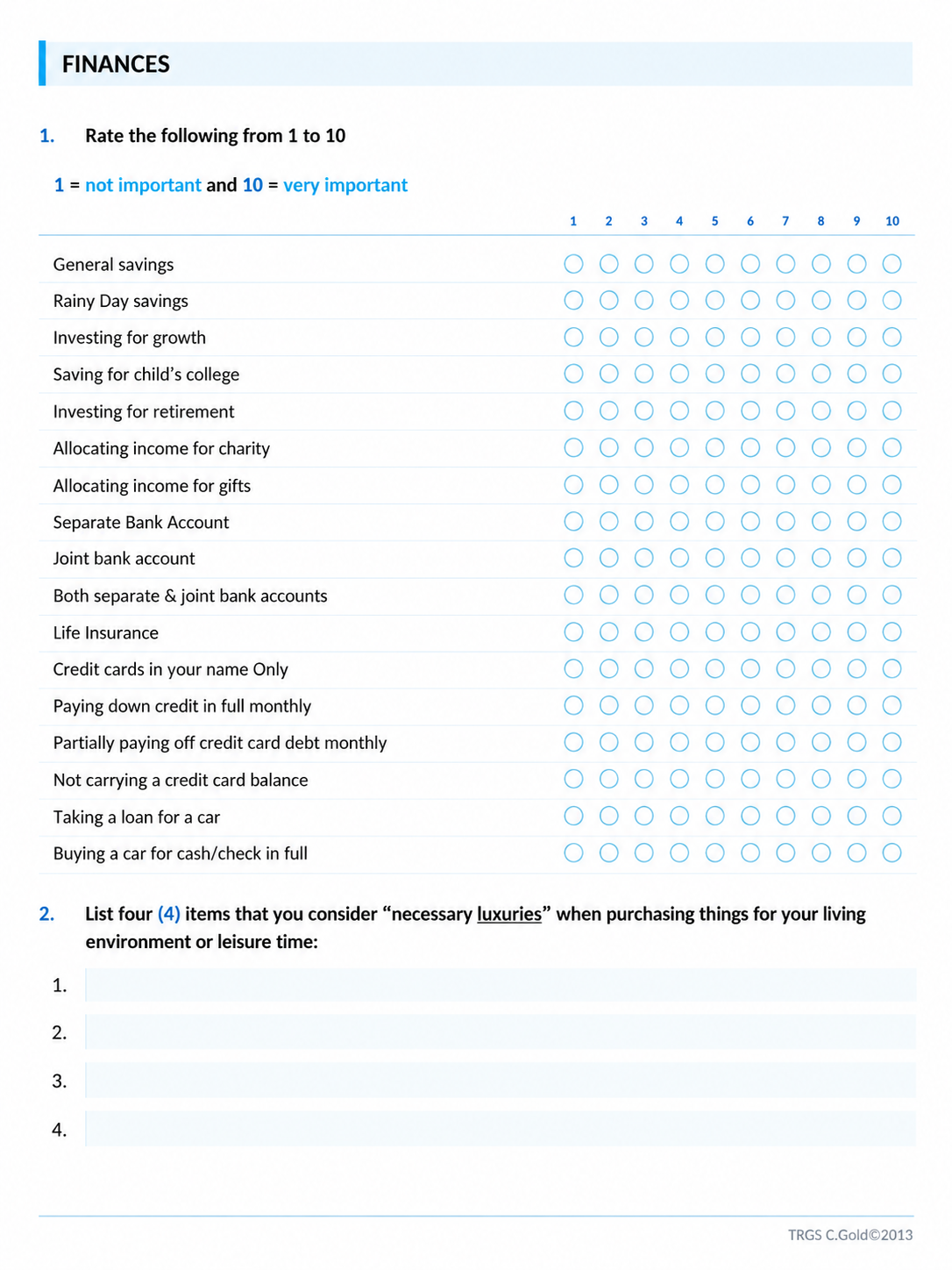
The Relationship Compass© assessment, through specifically designed questions, explores in depth a variety of areas within a relationship, such as finances, living environments, intimacy, vacations, in-laws, child rearing, social outings, hobbies, and friendships just to name a few. An evaluation and scaling of the individual answers allow me to identify a couple’s misalignments and evaluate to what degree those misalignments exist.
The Relationship Compass© Report then highlights and details the areas of disagreement and their degree, which then allows the couple to proactively negotiate a solution in advance of the problem!
The Relationship Compass© and its findings empower both people in a relationship, supports the long-term health of the relationship, and is the best proactive step you can take in creating a peaceful and harmonious future together.